


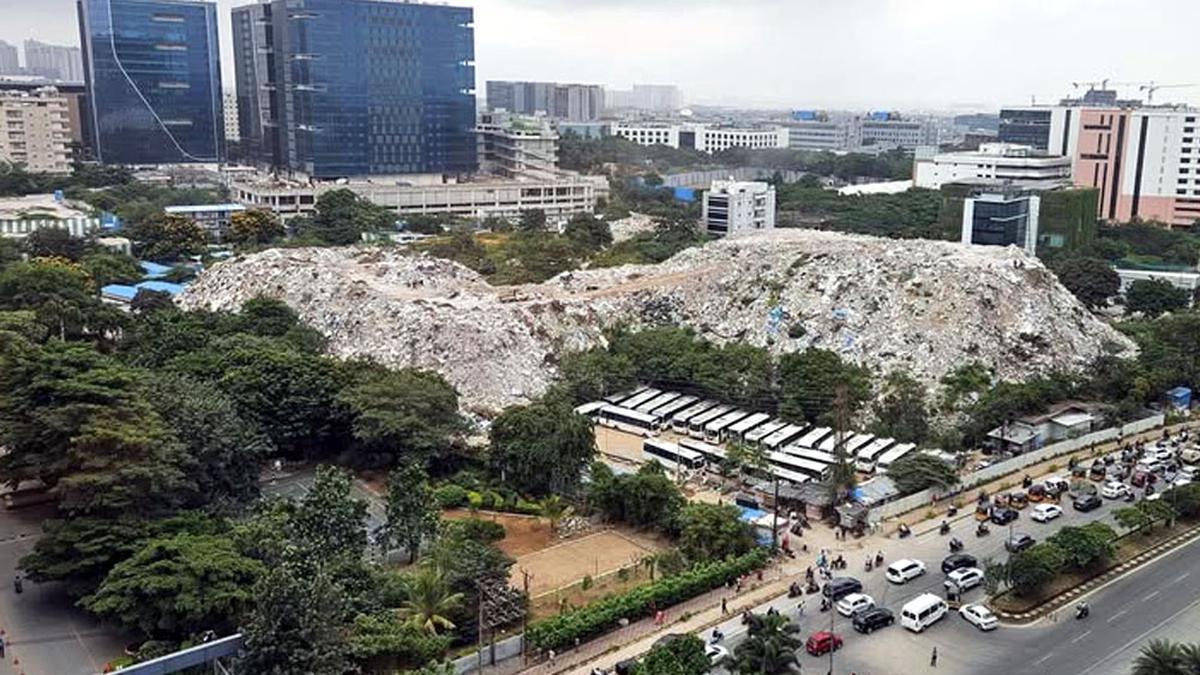
Hyderabad’s Gachibowli IT corridor is facing a severe waste management crisis, accumulating an estimated 15 lakh tonnes of unsegregated waste. This waste mountain, primarily construction debris mixed with municipal solid waste, poses significant environmental and health risks.
The problem stems from rapid, unplanned infrastructure development alongside a lack of adequate waste processing facilities. Construction activity from numerous IT companies, residential projects, and commercial establishments generates vast quantities of debris, often illegally dumped along roadsides, open spaces, and even water bodies. The existing Jawahar Nagar dumping yard is already overwhelmed and struggles to handle the city’s total waste, let alone the concentrated output from Gachibowli.
Local authorities acknowledge the issue but cite land scarcity as a major obstacle to establishing new processing or scientific landfill sites within the vicinity. Attempts at waste segregation at source have been largely unsuccessful due to a lack of public awareness and enforcement. Private waste collectors often contribute to the problem by indiscriminately mixing waste types, hindering recycling efforts.
The accumulated waste is attracting pests, emitting foul odors, and contributing to air and water pollution. Dust from the debris exacerbates respiratory problems for residents. The situation is further complicated by the presence of unauthorized waste processing units operating without proper environmental clearances.
Recent court directives have prompted authorities to initiate cleanup drives and impose fines on illegal dumpers. However, these measures are considered temporary solutions. Long-term strategies being considered include establishing decentralized waste processing units, promoting prefabrication in construction to reduce debris, and strengthening enforcement of waste management regulations. A comprehensive, integrated waste management plan involving all stakeholders – IT companies, builders, residents, and the municipal corporation – is crucial to address this escalating crisis and prevent further environmental degradation. The article highlights the urgent need for sustainable waste management practices to support the continued growth of the IT corridor.