


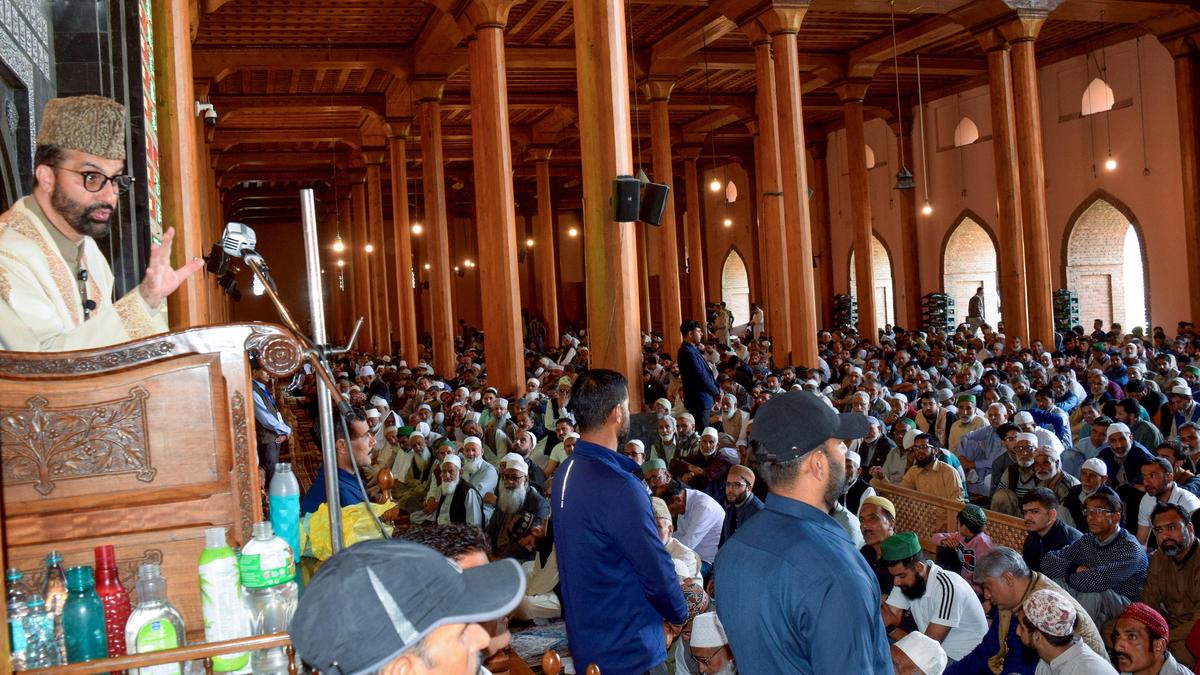
Mirwaiz Umar Farooq has voiced strong concern over the closure of Jamia Ahsanul Qwaim, a school-cum-seminary in Srinagar, under the Unlawful Activities (Prevention) Act (UAPA). The institution, established in 1931, was sealed by authorities following allegations of promoting secessionist ideology and providing a platform for anti-national activities.
Mirwaiz, in a statement, described the closure as a deeply distressing development, highlighting the seminary’s long-standing role in providing both modern education and religious instruction to generations of Kashmiris. He emphasized its contribution to societal well-being and its reputation for peaceful, moderate teachings.
He argued that shutting down educational institutions is counterproductive and fuels alienation, particularly among the youth. The Mirwaiz questioned the justification for invoking UAPA, a stringent law typically reserved for serious threats to national security, against an educational establishment. He suggested that alternative approaches, such as dialogue and engagement, would be more effective in addressing any concerns regarding the institution’s activities.
The All Parties Hurriyat Conference (APHC), of which Mirwaiz is a key leader, also condemned the closure. They characterized the action as part of a broader pattern of suppressing religious and educational institutions in Kashmir.
The authorities maintain that the closure was based on credible evidence linking the seminary to activities detrimental to national security. However, details of this evidence have not been publicly disclosed. The move has sparked criticism from various quarters, with many viewing it as an infringement on religious freedom and educational rights. Mirwaiz has called for a review of the decision and the reopening of the seminary, emphasizing the importance of preserving educational spaces and fostering an environment of trust and understanding in Kashmir. He believes such actions only exacerbate the existing sense of grievance and mistrust.