

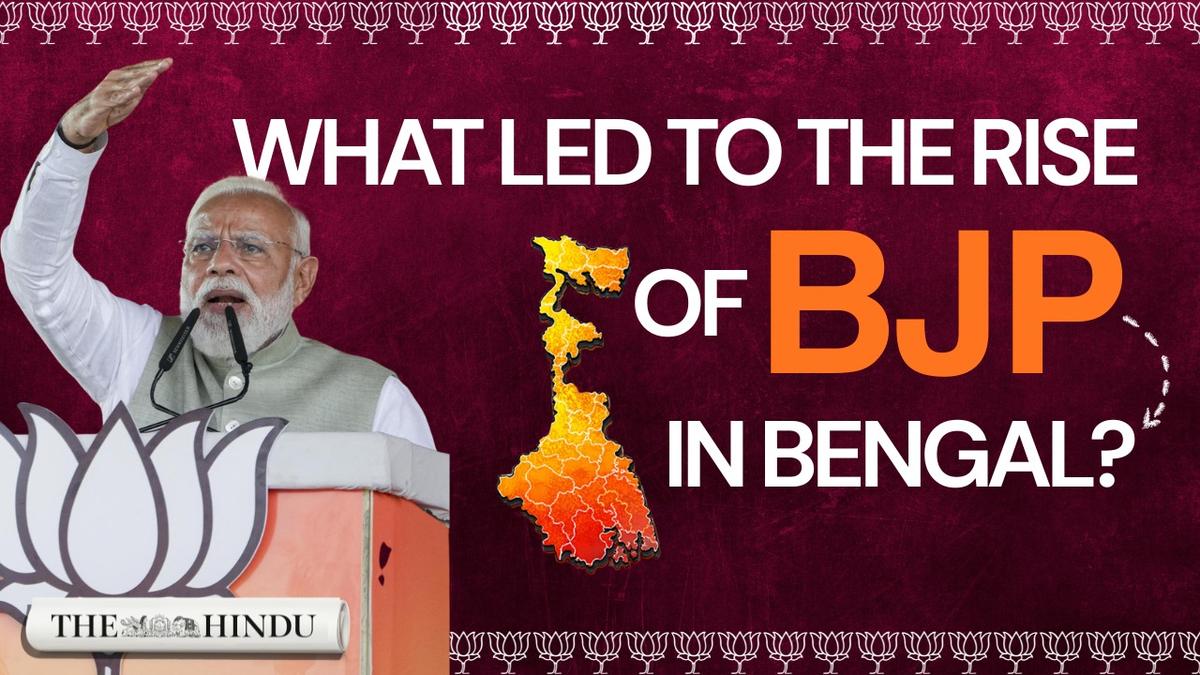
## Summary of The Hindu’s “Explained: Rise of BJP in West Bengal”
The video explains the Bharatiya Janata Party’s (BJP) significant rise in West Bengal, a state historically dominated by the Trinamool Congress (TMC) and, before that, the Left Front. Initially, the BJP had minimal presence, receiving less than 2% of the vote share in 2011.
Several factors contributed to the BJP’s growth. The first was the erosion of the Left Front’s support base following decades of rule, creating a political vacuum. The TMC, under Mamata Banerjee, filled this void initially, appealing to marginalized communities. However, allegations of corruption, nepotism, and the suppression of dissent gradually alienated sections of the population.
The BJP strategically capitalized on this discontent. They focused on building a strong organizational structure at the grassroots level, particularly in North Bengal and the Matua community-dominated areas. The Matua community, a large scheduled caste group with significant political influence, was actively courted by the BJP, offering them recognition and addressing their concerns.
Nationalistic rhetoric and the projection of a strong leadership image, particularly under Narendra Modi, resonated with a segment of the Bengali electorate. The BJP effectively utilized social media and a well-oiled propaganda machinery to disseminate its message.
The 2019 Lok Sabha elections marked a turning point, with the BJP winning 18 of the 42 seats in West Bengal, significantly reducing the TMC’s dominance. This success was attributed to the BJP’s ability to consolidate non-Muslim votes and make inroads into traditional TMC strongholds.
The 2021 Assembly elections saw a fiercely contested battle. While the TMC retained power, the BJP emerged as the primary opposition, winning 77 seats and achieving a substantial vote share. This demonstrated the BJP’s sustained growth and its transformation into a major political force in the state.
The video highlights that the BJP’s success isn’t uniform across the state; it’s concentrated in specific regions and among certain communities. Future success depends on expanding its reach beyond these areas and addressing concerns about its perceived outsider status. The TMC’s continued allegations of the BJP being a “party from outside” remain a significant challenge for the BJP in West Bengal.