

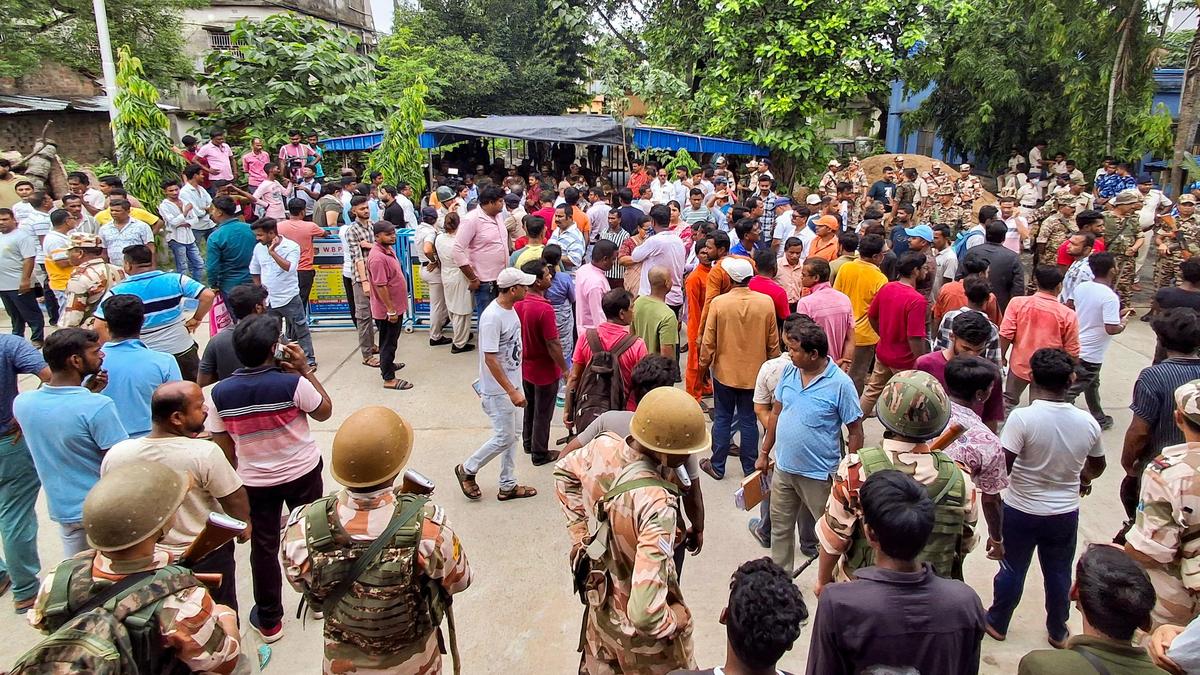
West Bengal continues to experience post-poll violence despite assurances from the ruling Trinamool Congress (TMC).
The article focuses on the case of Debasish Mondal, a close aide to Suvendu Adhikari, who was allegedly murdered after the election results were announced. The primary accused in his murder, along with several others involved in violence in Keshpur, remain at large.
Multiple FIRs have been filed regarding post-poll violence in Keshpur, but arrests have been limited, and key suspects are evading capture. Victims and their families allege police inaction and a biased investigation.
The violence isn’t limited to Keshpur. Reports indicate continued incidents of intimidation, vandalism, and attacks on opposition party workers across several districts including Purba Bardhaman, North 24 Parganas, and South 24 Parganas.
The BJP alleges that over 30 of its workers have been killed since the election results, while the TMC disputes these numbers. The state government claims to be taking action against perpetrators of violence regardless of party affiliation.
The National Human Rights Commission (NHRC) previously investigated post-poll violence in West Bengal and submitted a report highlighting widespread human rights violations. The Calcutta High Court also directed a court-monitored investigation into the violence.
Despite these investigations and court orders, the situation on the ground remains tense. Opposition parties claim that TMC-backed individuals are using their influence to obstruct justice and intimidate witnesses.
Families of victims are seeking justice and expressing a lack of faith in the state police. They are demanding a CBI investigation into the cases.
The article highlights a pattern of alleged impunity for perpetrators of post-poll violence and a continued sense of fear among opposition party workers and their families. The lack of arrests of key accused in high-profile cases like Debasish Mondal’s murder fuels these concerns.