

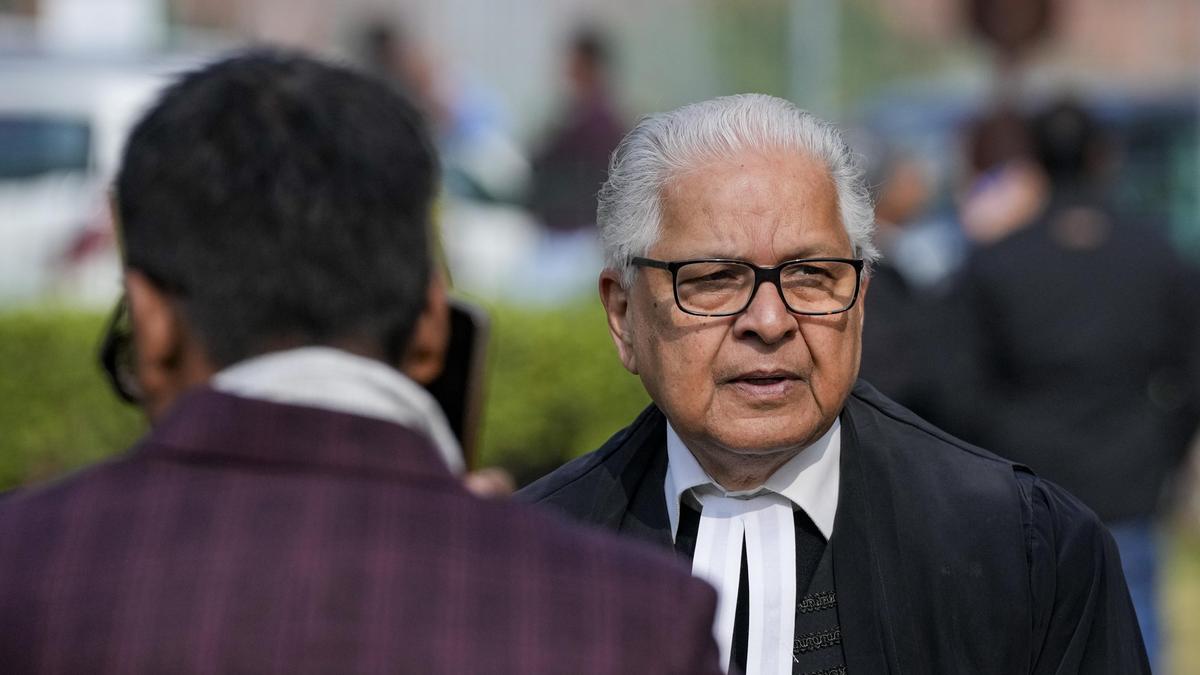
Tamil Nadu Governor R.N. Ravi’s decision to remit the disqualification of three AIADMK MLAs and subsequently invite Tamil Nadu Kongu Nadu Iyakku Kootamaippu (TNKIK) chief E.V.K.S. Elangovan to form a government is legally flawed, according to former Law Minister Ashwani Kumar.
Kumar argues the Governor’s actions deviate from established constitutional norms and precedents. He emphasizes the Governor’s primary duty is to act on the aid and advice of the Council of Ministers, led by the Chief Minister, and not to independently seek alternatives.
The disqualification of the MLAs, initially upheld by the Speaker, was remitted based on a review petition. Kumar questions the Governor’s authority to independently review a Speaker’s decision, asserting it undermines the legislature’s independence. He points out that judicial review of a Speaker’s disqualification order lies with the High Court, not the Governor.
Regarding inviting Elangovan, Kumar states the Governor should have first sought a floor test from the existing government led by M.K. Stalin to ascertain if it still commands a majority. Only after a failed floor test could the Governor explore alternative government formations. Inviting Elangovan without this crucial step is premature and potentially destabilizing.
Kumar highlights the Supreme Court’s rulings in the S.R. Bommai case, which emphasize the importance of majority support in government formation and the limited role of the Governor in such matters. He contends the Governor’s actions appear motivated by political considerations rather than constitutional principles.
He further notes that TNKIK does not have the numbers to form a government and the move appears to be an attempt to create political uncertainty. A floor test is the only constitutionally sound method to determine if an alternative government is viable. The Governor’s actions, according to Kumar, risk setting a dangerous precedent and eroding the foundations of parliamentary democracy.