


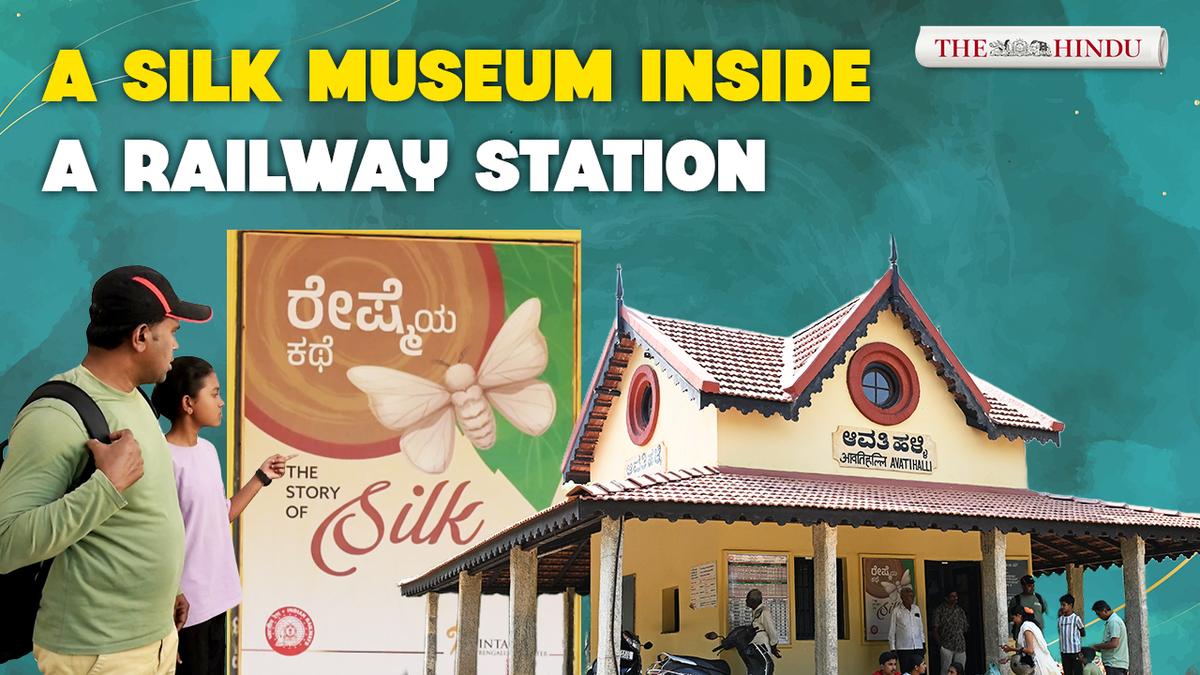
Bengaluru’s Cantonment Railway Station has been partially repurposed to house a new silk museum, showcasing Karnataka’s rich silk heritage. The museum, a collaborative effort between the Ministry of Railways and the Department of Handloom and Textiles, Karnataka, aims to preserve and promote the state’s silk industry.
The museum occupies a section of the heritage railway station building, specifically a previously unused waiting hall. It displays the entire silk production process, from silkworm rearing to the weaving of finished fabrics. Exhibits include live silkworms, cocoons, reeling machines, and various silk products like sarees, dhotis, and shawls.
Karnataka is a major silk producer in India, particularly known for its Mysore silk, renowned for its quality and craftsmanship. The museum highlights the history of silk in the region, tracing its origins and evolution. It also focuses on the economic importance of the silk industry to local communities, particularly sericulture farmers and weavers.
The initiative intends to attract both domestic and international tourists, providing them with an immersive experience of Karnataka’s silk tradition. Beyond showcasing the product, the museum educates visitors about the intricate techniques and artistry involved in silk production.
The museum’s opening is seen as a positive step towards revitalizing the Cantonment Railway Station, a historically significant building. Officials hope the museum will generate revenue and contribute to the station’s upkeep. The project blends heritage preservation with economic development, offering a unique cultural attraction within a functional transportation hub. The museum is open to the public and entry is free. It aims to be a center for learning, appreciation, and promotion of Karnataka silk.