

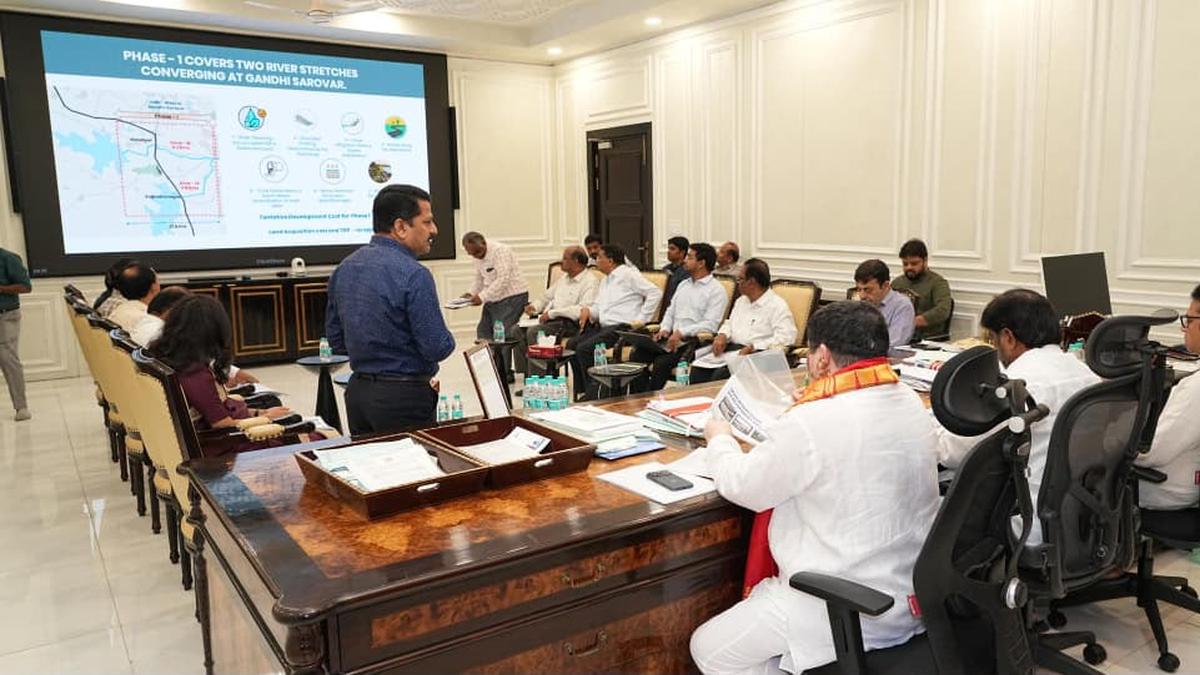
The Telangana government has released detailed guidelines for the first phase of the Musi River Rejuvenation Project, aiming to restore the river to its former glory and prevent future flooding in Hyderabad. The project, costing ₹3,780 crore, focuses on a 55.5 km stretch of the river within the Hyderabad Metropolitan Region, encompassing the Musi River and its tributaries.
Phase I is divided into three packages: Package 1 (5.5 km from Himayat Sagar to Pebbier Cheruvu), Package 2 (17 km from Pebbier Cheruvu to Nagole Dam), and Package 3 (33 km from Nagole Dam to Mucherla). The core objectives include increasing the river’s carrying capacity, preventing sewage and industrial effluents from entering the river, and improving the riverfront.
Key components involve constructing retaining walls, desilting the riverbed, and building sewage treatment plants (STPs). Specifically, 25 STPs with a combined capacity of 366 MLD will be constructed to treat wastewater before it enters the river. Industrial effluent treatment will be strictly monitored and enforced.
The guidelines emphasize land acquisition, rehabilitation of affected families, and environmental safeguards. A dedicated Project Management Unit (PMU) will oversee implementation, with regular monitoring and reporting to ensure timely completion. The project also includes developing green spaces and walkways along the riverfront to enhance the aesthetic appeal and provide recreational facilities.
To prevent encroachment, the government will demarcate the river’s Full Tank Level (FTL) and establish a buffer zone. Strict regulations will be enforced to prevent construction or dumping of waste within these zones. The project also incorporates flood moderation measures, including strengthening existing structures and constructing new ones to manage peak flows.
The guidelines also detail provisions for quality control, grievance redressal, and public participation to ensure transparency and accountability throughout the project’s lifecycle. The project aims to transform the Musi River from a drainage channel into a vibrant urban waterway.