


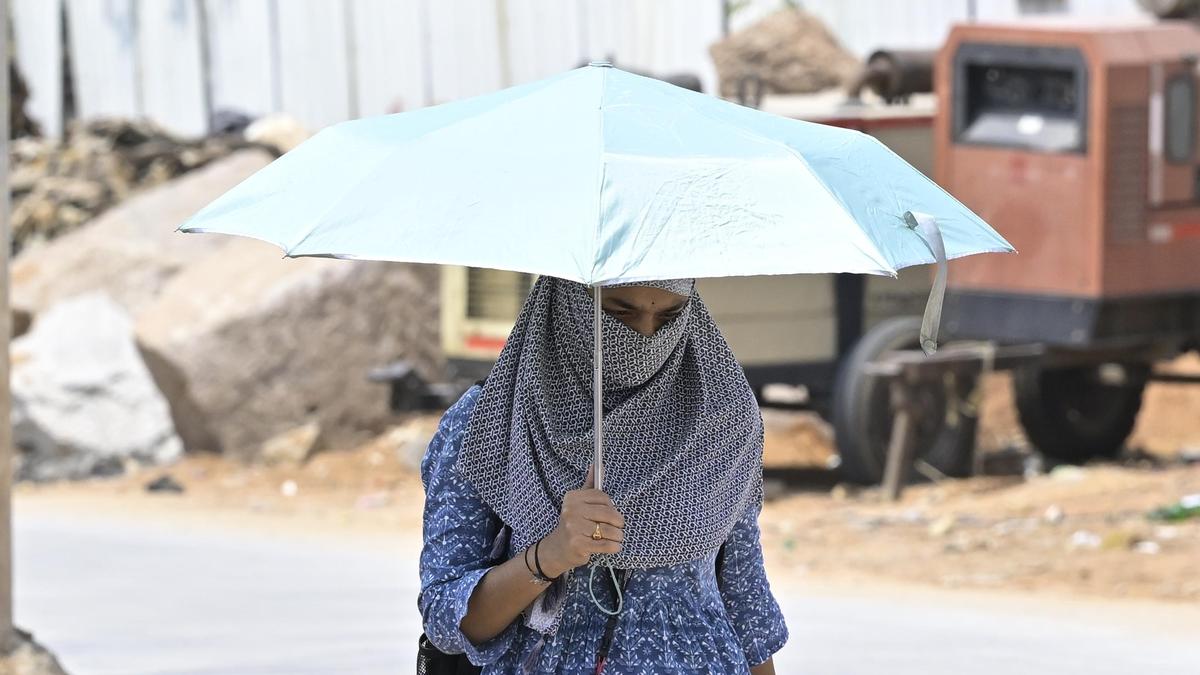
Telangana is bracing for increasingly severe summers, with projected temperature increases significantly exceeding the global average. Analysis of past data and climate models indicates a warming trend across the state, particularly during the pre-monsoon months of March, April, and May.
The article details a comprehensive temperature tracker developed by researchers at the Telangana State Development Planning Society (TSDPS) using data from 1,200 weather stations. This tracker reveals a consistent rise in average maximum temperatures over the past three decades. The state’s average maximum temperature has increased by approximately 0.5°C to 0.8°C since the 1990s.
Specifically, the analysis shows that the number of ‘heatwave’ days – those with maximum temperatures exceeding 40°C – has risen dramatically. Several districts, including Adilabad, Bhadradri Kothagudem, and Karimnagar, have experienced a substantial increase in these extreme heat days. The frequency of very severe heatwave conditions (temperatures above 45°C) is also on the rise.
Projections for 2026 suggest a further increase in temperatures. Models predict a potential rise of 2°C to 3°C above the 1981-2010 average during the summer months. This could lead to more frequent and intense heatwaves, impacting public health, agriculture, and water resources.
The study highlights regional variations in warming trends. Northern Telangana is expected to experience more pronounced temperature increases compared to the coastal regions. Factors like land use changes, urbanization, and deforestation are contributing to this localized warming.
The TSDPS tracker also incorporates vulnerability assessments, identifying areas and populations most at risk from heat-related illnesses. These include outdoor workers, the elderly, and those with pre-existing health conditions. The data is intended to help authorities implement targeted heat action plans and mitigation strategies, such as early warning systems, public awareness campaigns, and improved access to cooling centers. The article emphasizes the urgent need for proactive measures to address the escalating threat of extreme heat in Telangana.