


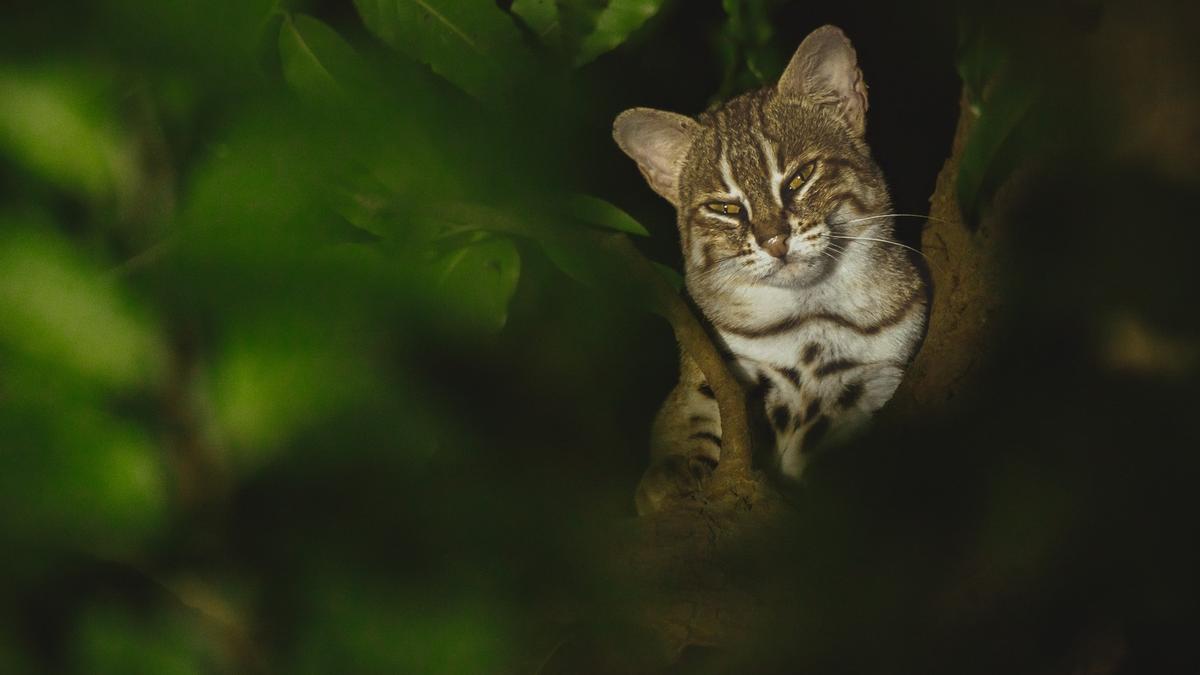
Researchers have, for the first time, photographed a rusty-spotted cat – the world’s smallest wild cat – with its kitten in Faridabad, Haryana, confirming breeding of the species outside protected forest areas. This discovery is significant as previous confirmed sightings and breeding were largely restricted to national parks and wildlife sanctuaries.
The images were captured using camera traps set up as part of a long-term mammal monitoring project by the Wildlife Institute of India (WII) and the Haryana Forest Department in the Mangarban forest area. The mother cat was identified by her unique coat pattern, previously documented in 2022. The kitten is estimated to be around two to three months old based on its size in the photographs.
Rusty-spotted cats are typically found in tropical and subtropical dry deciduous forests and grasslands. They are nocturnal and highly secretive, making them difficult to study. Their population is considered vulnerable, with threats including habitat loss, poaching, and human-wildlife conflict.
This finding indicates that the Mangarban forest, despite being degraded and fragmented, provides suitable habitat for the species. Researchers believe the area’s scrubland and proximity to human settlements offer a unique ecological niche. The presence of a breeding pair suggests a potentially larger, previously undocumented population in the region.
The discovery highlights the importance of conserving even fragmented forest patches outside protected areas. It also emphasizes the need for continued monitoring to understand the population size, distribution, and ecological requirements of rusty-spotted cats in human-dominated landscapes. Further research will focus on assessing the genetic diversity of the population and identifying potential threats to their survival in the area. The Haryana Forest Department is considering measures to strengthen conservation efforts in Mangarban, including habitat restoration and community engagement.