

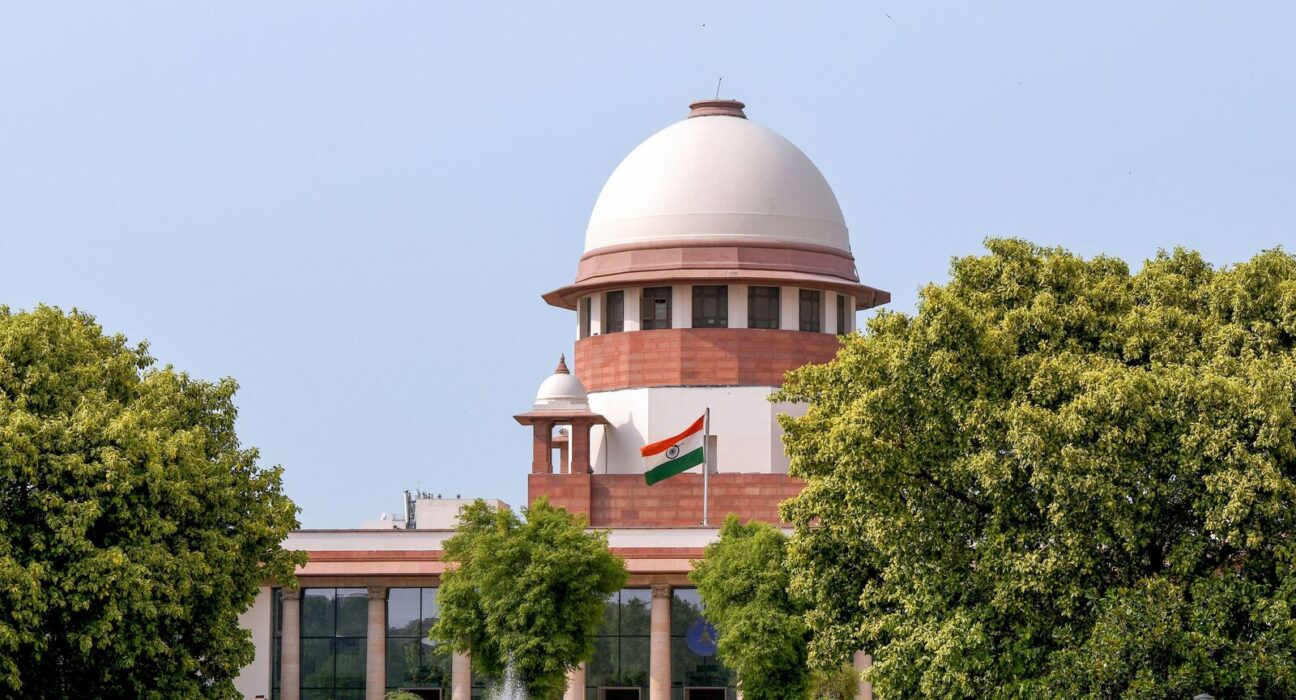
The Supreme Court has delivered a significant win for the DMK government in Tamil Nadu by overturning a previous Madras High Court decision that prevented the state from featuring the names and photographs of sitting and former chief ministers in its welfare schemes.
In addition to this decision, the apex court imposed a fine of ₹10 lakh on AIADMK leader C Ve Shanmugam, describing his original petition as a misuse of the legal process.
Led by Chief Justice B R Gavai with Justices K Vinod Chandran and N V Anjaria, the three-judge bench declared the challenge to the DMK’s actions as unfounded. According to the Supreme Court, there are no laws that explicitly forbid the use of living persons’ names or images in the promotion of welfare initiatives, as long as it doesn’t run afoul of particular legal restrictions.
The court called the litigation frivolous and overturned the July 31 ruling of the Madras High Court, reaffirming that elected governments are within their rights to publicize welfare programs using the current Chief Minister’s name.
The original restrictions were imposed by the Madras High Court in response to Shanmugam’s Public Interest Litigation. The High Court had instructed the Tamil Nadu government to avoid naming welfare schemes after living individuals, whether they were past or present chief ministers. It also barred the use of official portraits, party emblems, or the DMK flag in government promotion.
While the High Court permitted the state to continue rolling out welfare programs, it emphasized that all official communication should remain strictly neutral, without elements that would constitute political promotion.
This controversy came into sharp focus over the DMK’s outreach program ‘Ungaludan Stalin’ (‘With You, Stalin’), which directly connects Chief Minister M K Stalin with the people. The PIL criticized this program, arguing it served as political self-advertisement funded by the public purse, and therefore, failed the test of neutrality and proper use of state power.
Despite these criticisms, the DMK has touted ‘Ungaludan Stalin’ as a crucial bridge to its grassroots base, with the Chief Minister personally engaging with citizens.
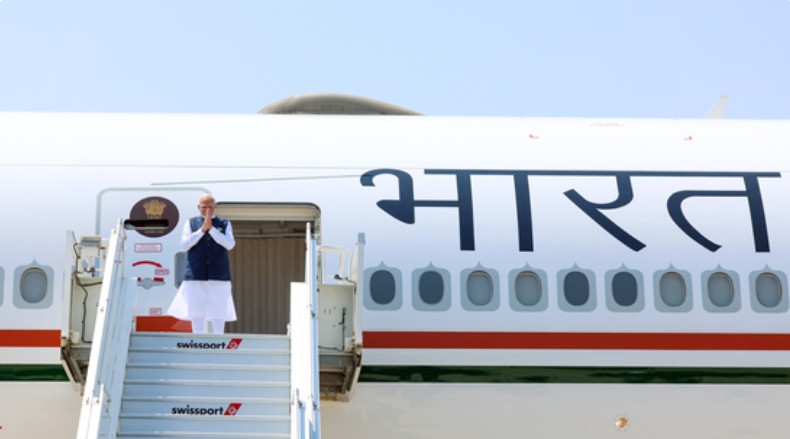
This practice isn’t unique to Tamil Nadu. The central government has also frequently used Prime Minister Narendra Modi’s image in national welfare schemes and public messaging. Across programs like the Pradhan Mantri Awas Yojana and during the COVID-19 pandemic’s free ration distribution, Modi’s face has appeared on posters, ration bags, banners, and even vaccination certificates.
Critics say these moves blur the line between governance and political branding. During the COVID-19 vaccine rollout, the inclusion of PM Modi’s photograph on all vaccination certificatesdistributed via the CoWIN platformsparked considerable debate and legal scrutiny. The Kerala High Court, however, chose not to intervene in the matter.
Opposition parties, mainly Congress and Trinamool Congress, accuse the BJP of using publicly-funded programs for political gain. The BJP, in its defense, claims that highlighting the Prime Minister’s role in these initiatives increases government accountability and leadership visibility.