

Australia has announced its intention to formally recognize a Palestinian state at the United Nations, framing the contentious decision as a critical step toward advancing a two-state solution amid the ongoing Israel-Gaza conflict. The move, described by Australian officials as a ‘moral and pragmatic necessity,’ aims to reignite stalled diplomatic efforts and counter the escalating humanitarian crisis in the region. While Israel has condemned the decision as a ‘reward for terrorism,’ Australia argues that recognizing Palestinian statehood aligns with international law and offers the best hope for lasting stability.
Foreign Minister Penny Wong emphasized that the decades-long conflict cannot be resolved through military means alone, stressing the urgency of addressing Palestinian aspirations for self-determination. “A two-state solution isn’t just a political ideal—it’s the only viable path to breaking the cycle of violence and ensuring security for both Israelis and Palestinians,” she stated. The announcement comes amid global outcry over the catastrophic toll of the Israel-Gaza war, which has claimed over 35,000 lives and displaced nearly 2 million people since October 2023.
Australia’s shift reflects a growing international consensus, with several European nations, including Ireland, Spain, and Norway, recently taking similar steps. However, the decision has drawn sharp criticism from Israeli officials, who accuse Canberra of undermining their right to self-defense. Prime Minister Benjamin Netanyahu branded the move ‘counterproductive,’ arguing that unilateral recognitions weaken prospects for direct negotiations. Australia, meanwhile, reiterated its condemnation of Hamas’ October 7 attacks and affirmed Israel’s right to exist securely within internationally recognized borders.
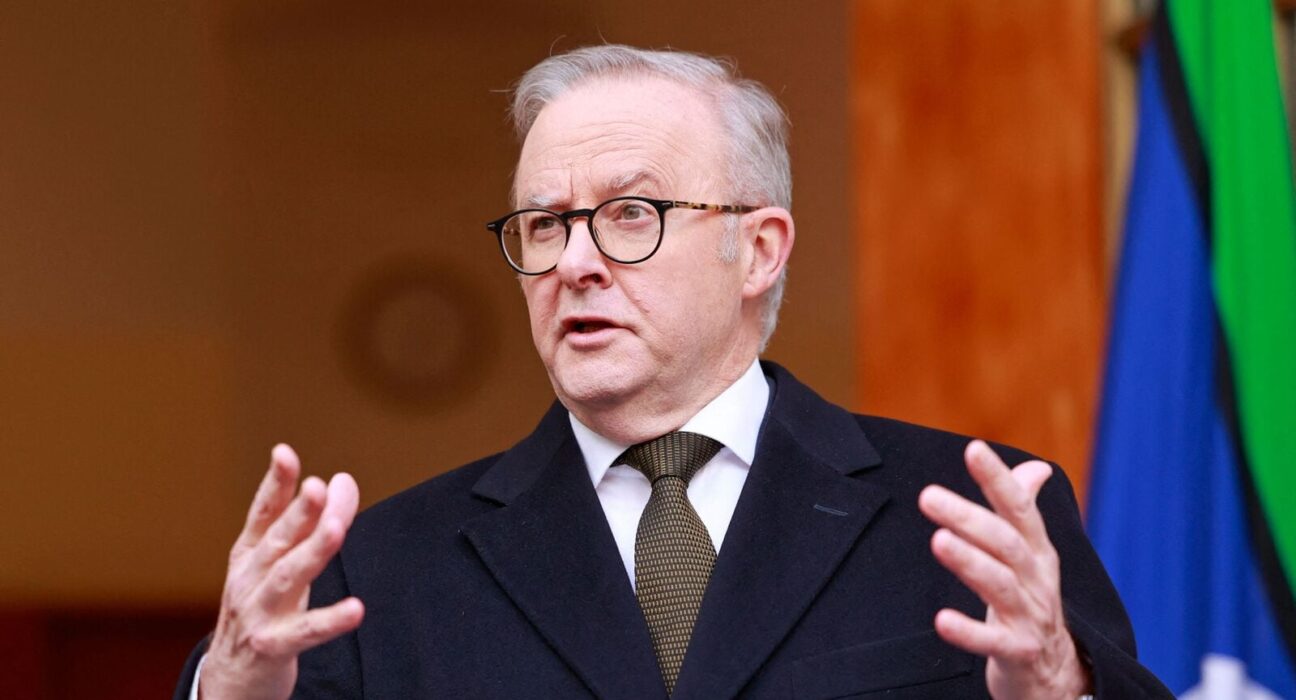
The Albanese government’s stance underscores a delicate balancing act. While advocating for Palestinian sovereignty, Australia has pledged to tie formal recognition to governance reforms, including the removal of Hamas from power in Gaza and guarantees against violence. Analysts suggest this approach seeks to address Israeli security concerns while pressuring Palestinian leaders to commit to peaceful dialogue. Critics, however, argue that such preconditions risk perpetuating the status quo, leaving civilians trapped in a cycle of occupation and retaliation.
For many Palestinians, Australia’s decision represents a long-overdue validation of their struggle for statehood. “This isn’t just symbolic—it’s a lifeline,” said Sami Khader, a Gaza-based humanitarian worker. “Every child here dreams of a future without fear. Recognition gives us hope that the world hasn’t forgotten our right to exist.” Yet, with Israeli settlements expanding in the West Bank and Gaza’s reconstruction stalled, grassroots skepticism remains high. “What good is a state on paper if we still live under bombs and blockades?” asked Rana Al-Masri, a displaced mother in Rafah.
As global powers grapple with their roles in the conflict, Australia’s pivot highlights the widening divide between traditional allies of Israel and those prioritizing Palestinian rights. While the U.S. and Germany continue to resist recognition without mutual agreements, the UN General Assembly has increasingly backed Palestinian membership. With famine looming in Gaza and regional tensions flaring, the Albanese government insists its policy is driven by a simple imperative: “Without justice for Palestinians, there will never be peace for anyone.”